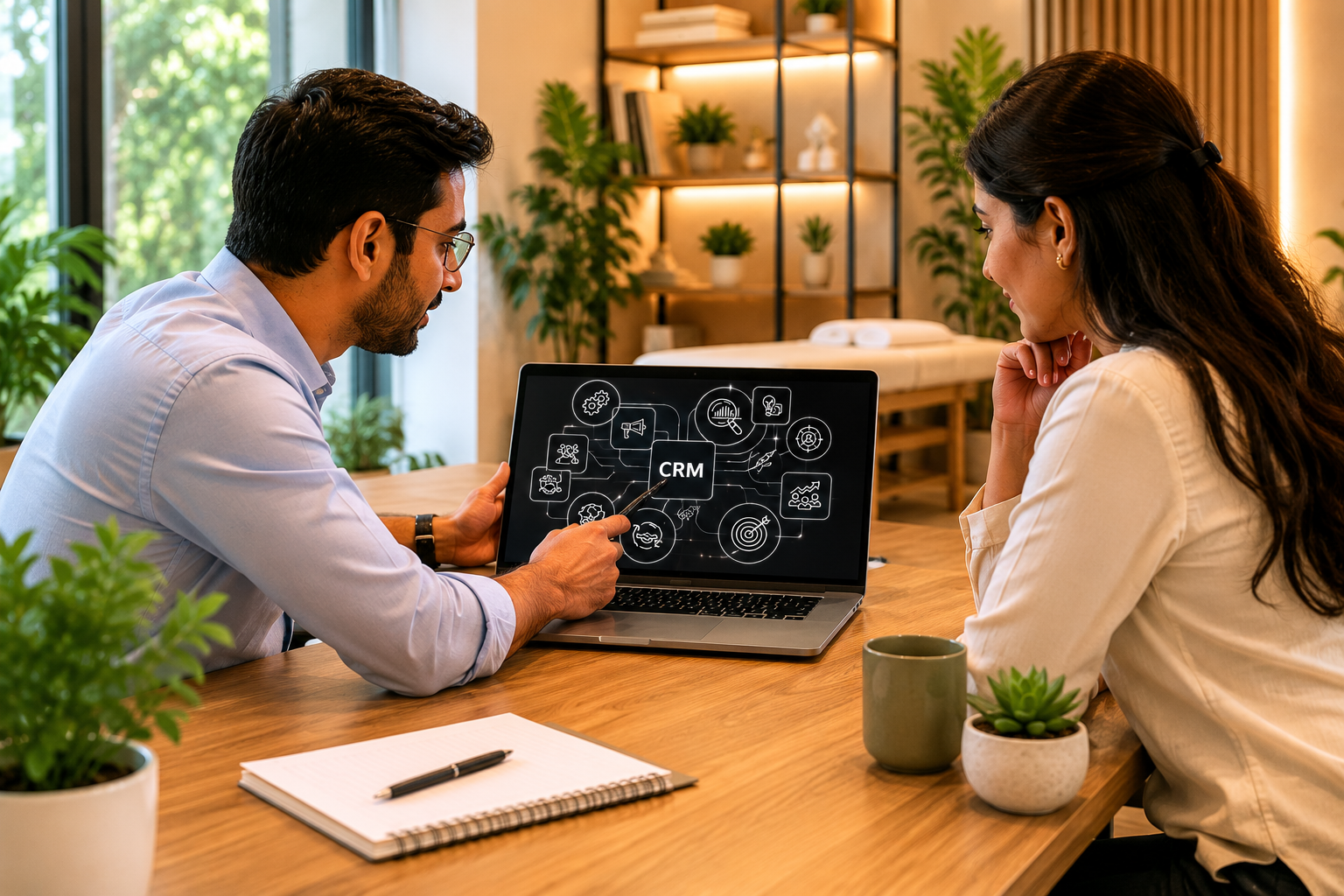
Most wellness centres are losing leads not because of poor service but because of poor systems. Here is why a purpose-built wellness CRM changes everything.
There is a particular kind of quiet chaos that lives inside most wellness centres.
On the surface, everything looks peaceful, the incense is burning, the treatment rooms are full, and the front desk is managing enquiries. But behind the scenes, leads are falling through WhatsApp threads. Follow-ups are being tracked on sticky notes. A seeker who enquired about a Panchakarma retreat three weeks ago was never called back. The spreadsheet hasn't been updated since Tuesday.
This is not a people problem. This is an infrastructure problem.
And a CRM , a Customer Relationship Management system , is the solution most wellness centres either haven't adopted, or have adopted poorly, using tools built for someone else entirely.
The Wellness Seeker Is Not a Typical Customer
Before we talk about software, let us understand the person on the other side of the enquiry.
Someone exploring Panchakarma for the first time is not making an impulse purchase. They are considering a significant investment , financially, physically, and emotionally. They may spend weeks reading, asking questions, comparing centres, speaking to past guests. They need to trust you before they book. They need to feel heard before they arrive.
This is what the wellness industry calls a long decision cycle. And it fundamentally changes what a good CRM must do.
A generic CRM built for a SaaS company or an e-commerce store assumes a buyer who moves quickly, compares rationally, and converts in days. A wellness seeker moves differently. They respond to warmth, follow-up timing, personalisation, and the feeling that your centre truly understands their condition and intention.
Generic software cannot account for this. It will send automated emails that feel cold. It will flag leads as "stale" after five days when the seeker simply needed more time. It will give you a pipeline built for deals, not for healing journeys.
What a Wellness CRM Actually Does
A CRM designed for the wellness industry manages the entire seeker journey, from the moment they first enquire to the moment they complete their programme and beyond.
Here is what that looks like in practice:
Lead capture and centralisation. Every enquiry from your website, Meta Ads, Google Ads, Instagram DMs, and WhatsApp flows into a single dashboard. No more chasing leads across five different platforms or losing someone because they messaged on a channel nobody checked.
Seeker profiling. A wellness CRM stores not just contact information, but health concerns, programme interests, preferred dates, budget range, and conversation history. When your team follows up, they do not start from scratch. They already know the context.
Automated follow-up sequences. If a seeker enquires but does not respond, the CRM triggers a gentle follow-up sequence, a WhatsApp message on day two, an email on day five, a call reminder on day eight. The timing and tone are calibrated for wellness, not for urgent sales.
Booking and occupancy management. A wellness CRM connects directly to your programme calendar. It shows you which retreats have availability, which are filling quickly, and where you need to push marketing spend. Seasonal patterns, the post-Diwali wellness rush, the summer slowdown, become visible and manageable.
Post-programme nurturing. The relationship does not end at checkout. A good CRM helps you stay connected with past guests through newsletters, anniversary messages, seasonal programme announcements, and referral invitations. Repeat bookings and word-of-mouth become a predictable revenue stream, not a happy accident.
Why Generic Software Fails Wellness Centres
Many wellness centres have tried HubSpot, Zoho, or basic spreadsheet-based systems. Most of them are still struggling. Here is why:
The terminology does not fit. Generic CRMs speak in terms of "deals", "pipelines", "closing". None of this language maps to how a wellness centre actually operates. You are not closing deals. You are welcoming seekers.
The automation is too aggressive. Generic tools are designed to maximise conversion velocity. In wellness, a pushy follow-up sequence destroys trust. The pacing needs to be different, more patient, more empathetic, more aligned with how people actually make decisions about their health.
The integrations are not built for your platforms. Your leads come from Meta lead forms, Google Ads, Justdial, and your own website. Your communications happen on WhatsApp and phone. Your payments go through Razorpay. A generic CRM requires significant custom development to connect these systems, if it can be done at all.
There is no wellness context built in. A wellness CRM should understand Panchakarma treatment lifecycles, Ayurveda consultation flows, retreat occupancy models, and programme durations. These are not fields you can simply add to a generic contact record.
What to Look for in a Wellness CRM
If you are evaluating CRM solutions for your centre, these are the questions that matter:
- Is this built specifically for wellness, or will I need to customise a generic tool?
- Does it integrate with WhatsApp, Meta Ads, Google Ads, and my payment gateway?
- Can I set up automated follow-up sequences that respect the pace of wellness decision-making?
- Does it give me occupancy visibility so I can manage seasonal demand?
- Is there support from people who understand my industry?
The last point is often overlooked. A CRM is not just software. It is a system that your team lives inside every day. If the support team does not understand the difference between a Panchakarma enquiry and a yoga day-pass enquiry, they cannot help you build the right workflows.
Infrastructure Is Not a Luxury. It Is a Foundation.
There is a common belief in the wellness industry that marketing and technology are secondary to the quality of the healing offered. And in one sense, this is true, no amount of automation replaces genuine care and expertise.
But even the most exceptional wellness centre cannot grow if its enquiries go unanswered, its leads are untracked, and its operations are held together by memory and manual effort.
A CRM is not a compromise of the wellness ethos. It is an expression of it , because it ensures that every seeker who reaches out to you receives the attention, follow-through, and care they deserve, from the very first message.
Yogic Verse builds purpose-built CRM and marketing infrastructure for Ayurveda centres, yoga institutes, Panchakarma retreats, and wellness resorts. If you are ready to replace the chaos with clarity, book a free strategy call.
Explore our Wellness CRM and CRM Automation solutions.
Yogicverse
Want More Wellness Insights?
Explore our blog and articles for the latest in wellness technology and business growth.