Gen Z is redefining luxury through intentional rest. Mini retirement culture is rising fast and wellness retreats are at the center of it. Here is what this means for wellness brands in 2026
The definition of luxury is changing.
For years, luxury meant expensive hotels, international vacations, fine dining, and status-driven travel experiences.
Today, a growing number of young professionals are choosing something very different:
Rest.
Not once a year. Not after burnout. But consistently.
Across India and globally, Gen Z professionals and younger millennials are embracing what many are now calling "mini retirement culture" taking short wellness breaks, digital detox weekends, mindfulness retreats, Ayurveda programs, and burnout recovery escapes throughout the year instead of waiting for traditional long vacations.
This shift is quietly transforming the wellness industry, wellness tourism, and the luxury retreat business.
And most wellness brands are still underestimating how massive this behavioral change really is.
What Is Mini Retirement Culture?
Mini retirement culture refers to the growing trend of professionals taking intentional short breaks throughout the year focused on:
- Mental wellness
- Stress recovery
- Mindfulness
- Holistic healing
- Self-care
- Preventive wellness
- Emotional reset
Unlike traditional vacations, these experiences are less about sightseeing and more about restoration.
Instead of waiting 20 years for retirement to "slow down," younger audiences are integrating recovery into everyday life.
This is especially visible among Gen Z corporate employees, startup founders, remote workers, creators, entrepreneurs, and high performance professionals.
Search interest around terms like wellness retreats, digital detox retreats, luxury wellness resorts, Ayurveda retreats in India, burnout recovery retreats, yoga and meditation retreats, and holistic healing vacations has grown significantly as wellness tourism becomes mainstream.
Why Gen Z Is Driving the Wellness Retreat Industry
Gen Z is entering the corporate world differently from previous generations.
They are more aware of burnout, emotional exhaustion, work-life imbalance, nervous system regulation, mental health, and preventive healthcare.
Instead of glorifying overwork culture, many younger professionals are prioritizing flexible work, mindful living, slow travel, wellness experiences, and intentional rest.
This behavioral shift is directly impacting luxury wellness retreats, Ayurveda resorts, Panchakarma centers, holistic healing destinations, wellness hospitality brands, and preventive wellness businesses.
The modern wellness consumer is no longer waiting for a health crisis before investing in wellness. They are proactively seeking stress management retreats, emotional healing programs, detox retreats, meditation retreats, wellness vacations, mindfulness experiences, and corporate wellness escapes.
Wellness Is Becoming the New Luxury
A major shift happening globally is that wellness itself is becoming a status symbol.
Today's luxury consumer increasingly values peace, calm environments, intentional experiences, slower living, personalized healing, and mental clarity more than traditional forms of luxury consumption.
This is why premium wellness retreats, nature based stays, Ayurveda healing centers, and integrated wellness resorts are experiencing rising demand.
The new aspirational lifestyle is no longer "busy." It is balanced.
And younger audiences are willing to spend significantly on experiences that help them feel regulated, emotionally lighter, mentally clearer, and physically healthier.
This is one of the biggest reasons the global wellness tourism market is growing rapidly.
Why Aesthetics Matter More Than Ever in Wellness
Very few wellness brands openly discuss this, but aesthetics now play a major role in wellness consumer behavior.
Today's audiences discover wellness visually first.
Before someone experiences the therapy, the Ayurveda consultation, the yoga retreat, or the healing program they experience the brand digitally.
They experience the website, the Instagram presence, the retreat interiors, the visual identity, the atmosphere, and the overall aesthetic language.
Modern wellness consumers often make decisions emotionally within seconds.
This is why wellness branding, premium website design, visual storytelling, hospitality aesthetics, and experience-led marketing have become essential parts of wellness business growth. It is no longer only cafes, hotels, or luxury restaurants competing on aesthetics. Wellness spaces are too.
The Marketing Gap Most Wellness Brands Still Have
Despite rising demand, many wellness businesses still struggle with wellness lead generation, digital visibility, wellness SEO, conversion systems, performance marketing, and audience positioning.
The issue is rarely the experience itself. Many Ayurveda retreats and wellness centers already provide exceptional healing experiences.
The problem is usually unclear messaging, weak digital positioning, inconsistent branding, slow follow-up systems, poor SEO structure, and disconnected customer journeys.
Modern wellness audiences expect seamless digital experiences, personalized communication, fast inquiry responses, premium aesthetics, and emotionally aligned storytelling.
Brands that fail to evolve digitally risk becoming invisible — even if their offline experience is exceptional.
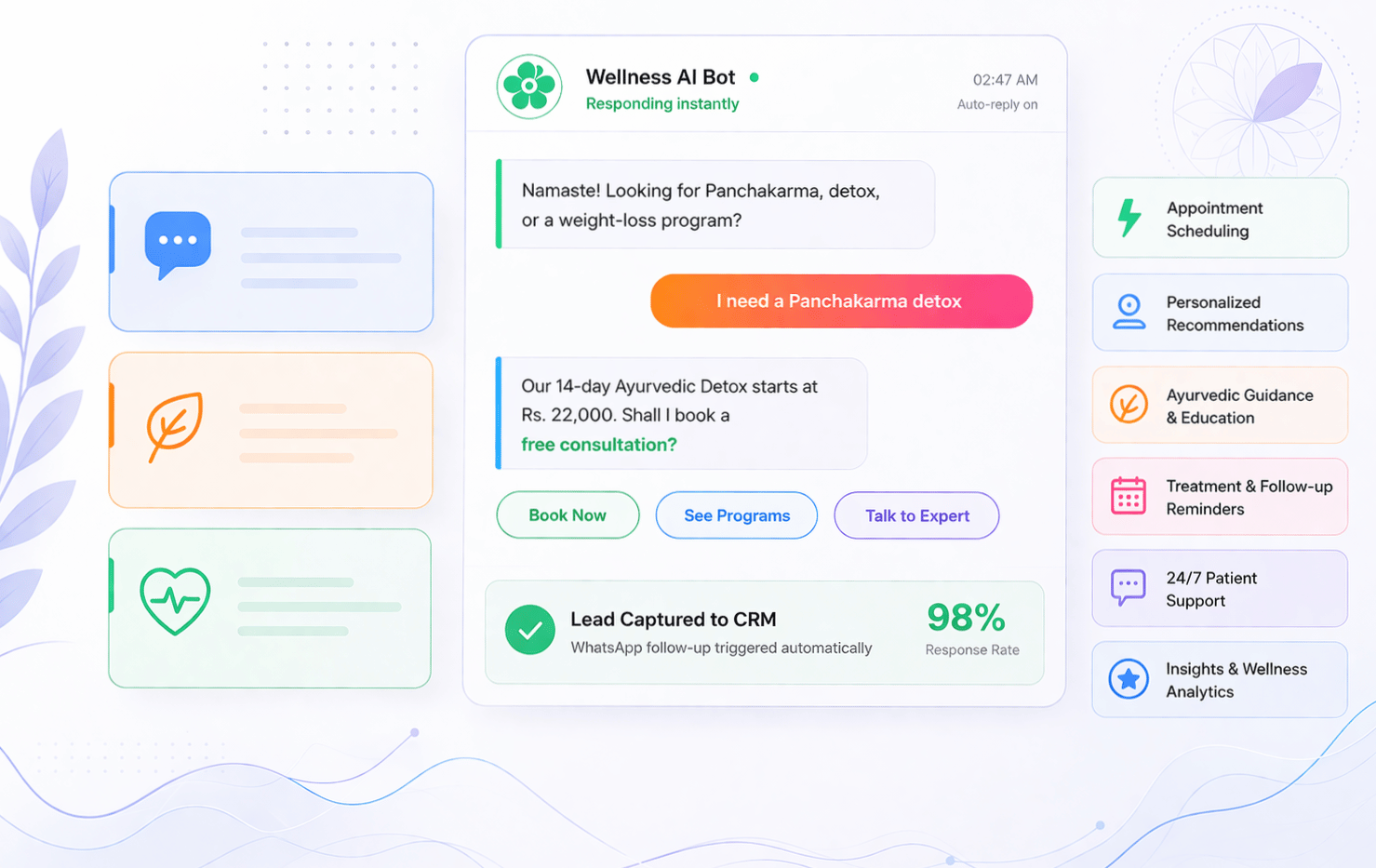
If you want to understand how a complete wellness marketing system works from inquiry to booking, this is worth exploring.
The Content and SEO Gap: What Most Wellness Brands Are Missing
Here is a gap that goes even deeper than branding and it is one that very few wellness businesses are addressing seriously yet.
Content that ranks on Google is not content that is simply well-written. It is content that is genuinely useful, original, and trusted.
Google's algorithm today evaluates content through a framework called E-E-A-T: Experience, Expertise, Authoritativeness, and Trustworthiness.
This matters enormously for wellness brands, because the internet is now flooded with generic content much of it AI-generated and copy-pasted without any real insight behind it.
Here is what this means practically:
A blog article that talks about "benefits of Ayurveda" in the same way as a thousand other websites will not rank, regardless of how beautifully it is written. Google rewards content that adds something new to the internet: original perspectives, real case studies, authentic experiences, specific data.
The brands that will win in wellness SEO over the next few years are not the ones producing the most content. They are the ones producing the most meaningful content content that reflects genuine expertise, lived experience, and a clear point of view.
What Google Actually Rewards in 2025 and Beyond
- Original insight - perspectives and observations that cannot be found anywhere else
- Real experience - stories from actual guests, healing journeys, practitioner expertise
- Depth over volume - one deeply researched article outperforms ten shallow ones
- Strong backlink profile - other trusted websites referencing your content
- Solid on-page SEO - clear title tags, structured headings, meta descriptions, internal linking
- Fast, mobile-optimized websites - technical SEO is the foundation everything else sits on
The AI Content Reality Every Wellness Brand Should Understand
Many wellness businesses are now turning to AI tools to generate blog content quickly. This is not inherently a problem AI can be a powerful research and drafting tool.
However, the brands that simply generate AI content and publish it without adding original perspective are building on weak foundations.
Generic AI-generated content tends to look and sound similar across thousands of websites. Google's systems are increasingly capable of identifying patterns of thin, undifferentiated content.
The risk is not just low rankings it is actively being filtered out of search visibility over time.
The correct approach is to use AI as a starting point, then layer in:
- Real guest testimonials and transformation stories
- Insights from your practitioners and healers
- Location-specific and culture-specific knowledge
- Data or observations unique to your retreat experience
- A distinctive editorial voice that reflects your brand's philosophy
This is what separates wellness content that ranks from wellness content that simply exists.
Final Thought
Mini retirement culture is no longer a niche trend. It is becoming a mainstream behavioral shift among younger professionals.
As burnout awareness, preventive wellness, and wellness tourism continue to grow, wellness retreats and Ayurveda brands have an enormous opportunity to reach audiences actively searching for restoration, clarity, and balance.
But showing up in front of that audience requires more than a beautiful retreat experience. It requires a digital presence that is trusted, visible, and genuinely valuable.
The brands that will grow fastest over the next decade are not necessarily the loudest ones. They are the ones that understand how modern wellness consumers think, search, feel, and choose and build their content and marketing around that understanding.
At YogicVerse, we closely study these shifts across wellness branding, wellness marketing, wellness consumer behavior, content strategy, SEO, and digital systems helping modern wellness businesses align with the future of the industry.
Learn more about how we build wellness infrastructure for modern wellness brands.
Ready to Transform Your Wellness Business?
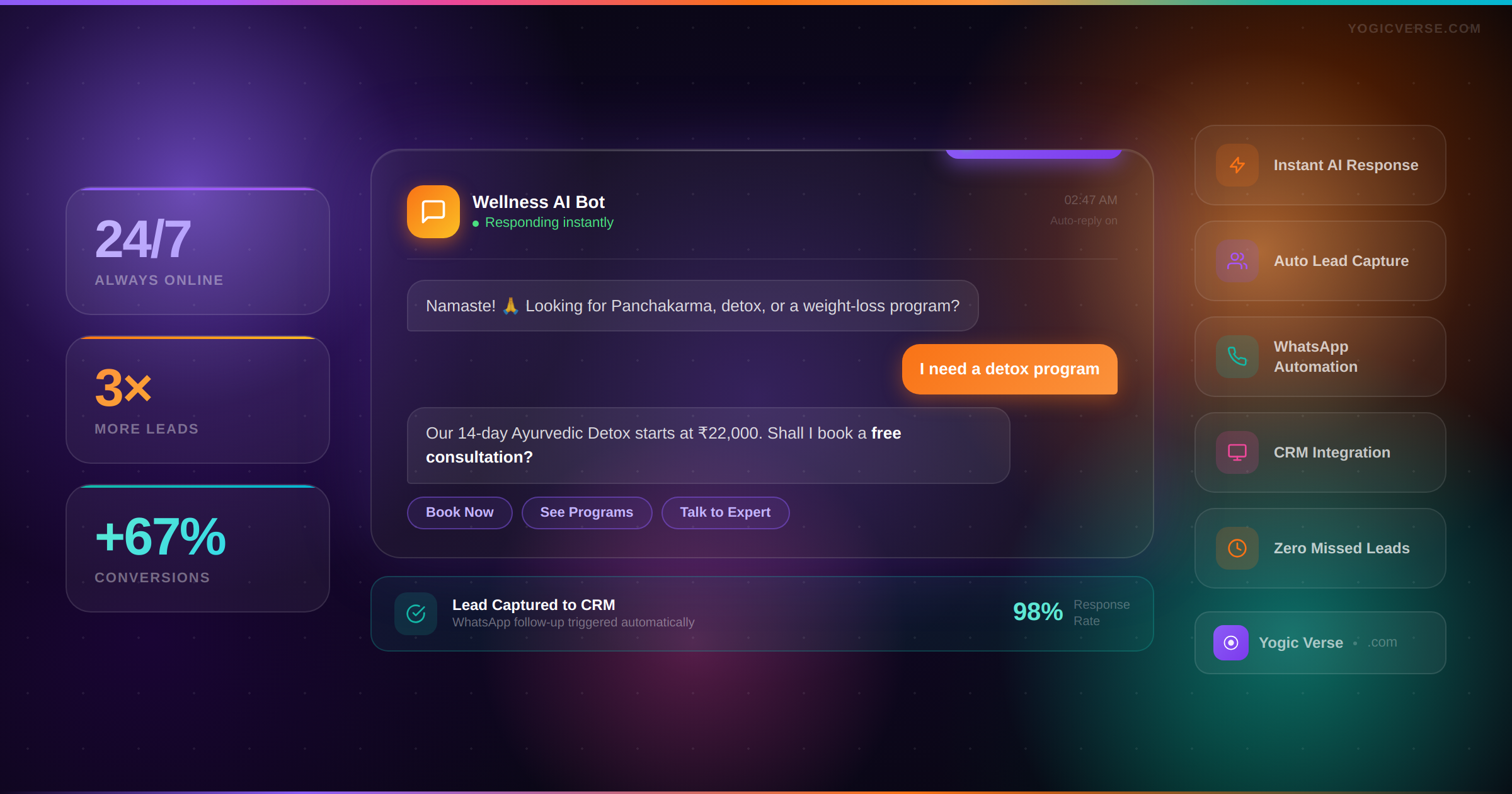
Get specialized CRM, AI Chatbot, and Marketing solutions for your center.
Get Started Today