The wellness retreat market is growing fast and so is the competition. Here is the complete step-by-step marketing guide for yoga retreats and Panchakarma programmes in 2026.
Running a yoga retreat or Panchakarma programme is one of the most meaningful things a wellness practitioner can offer the world. The work is transformative. The results, when the right guests arrive, are profound.
But getting the right guests to arrive, that is where most wellness centres struggle.
The wellness retreat market in India has grown significantly, with demand coming not just from domestic seekers but from guests across Europe, Southeast Asia, and the Gulf. Competition, too, has grown. There are more centres, more retreat listings, more content, and more advertising than ever before.
In this environment, marketing a wellness retreat well is no longer optional. It is the difference between full occupancy and half-empty programmes that quietly drain a centre's resources.
This guide walks you through how to market your yoga retreat or Panchakarma programme in 2026, from defining your positioning to running ads that actually convert.
Step 1: Know Exactly Who You Are Marketing To
Before spending a single rupee on advertising, you must be clear about who your ideal guest is.
This goes beyond "someone interested in wellness." It means understanding:
Are they coming for prevention or cure? A seeker dealing with a chronic condition approaches Panchakarma with very different expectations than someone seeking a wellness holiday.
Are they local, domestic, or international? This changes the platform you use, the language you write in, the trust signals you need, and the booking timeline you can expect.
What is their awareness level? A seeker who already knows what Panchakarma is needs different content than someone who has only vaguely heard of Ayurveda.
What objections do they have? Cost, travel logistics, uncertainty about what to expect, these must be addressed in your marketing before they are asked.
When you are clear on your guest profile, every subsequent decision, what to say, where to say it, how much to spend, becomes significantly easier.
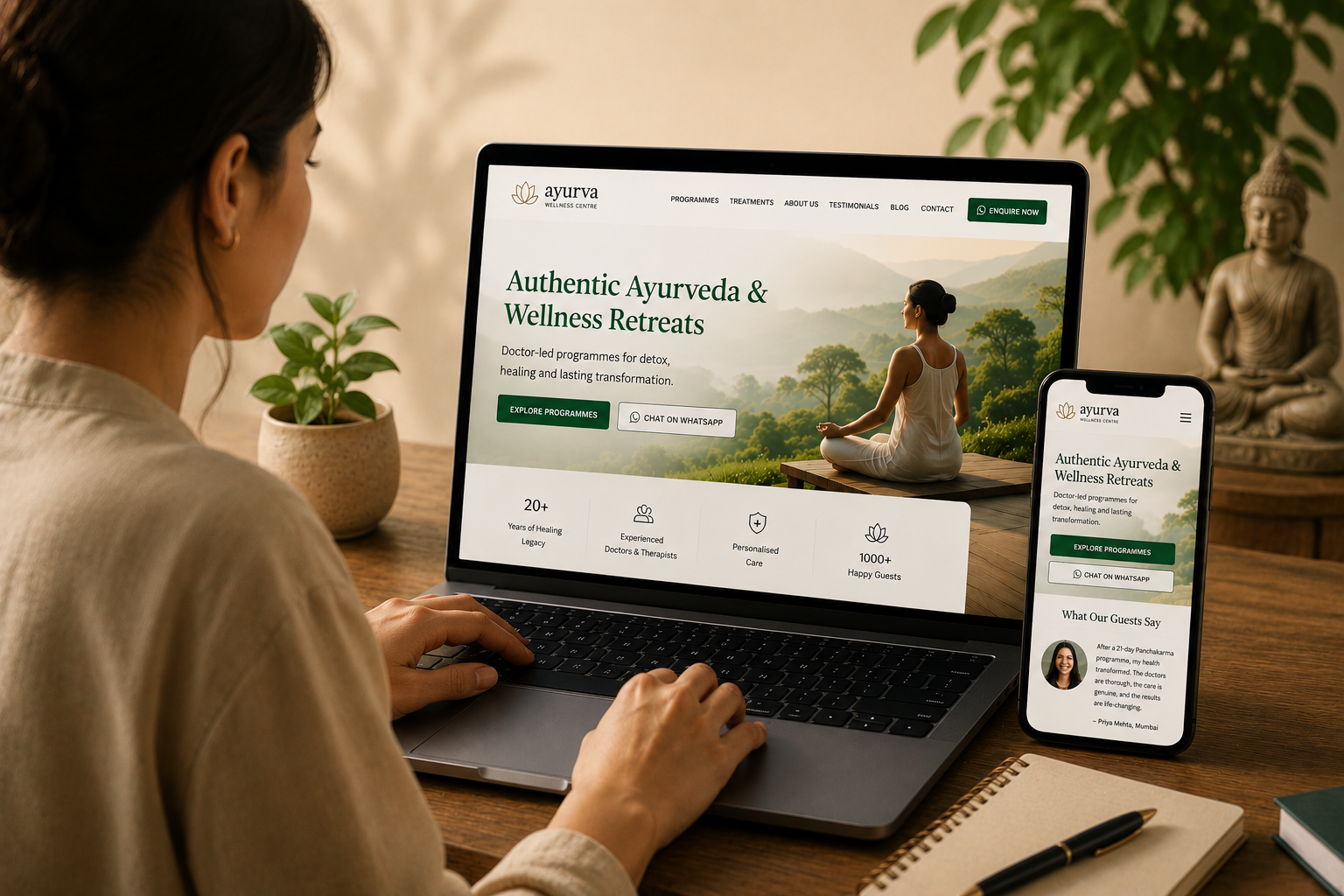
Step 2: Build a Website That Works as Your Best Sales Person
Most wellness centre websites are beautiful but passive. They look elegant, describe the programmes, and then wait. Visitors come, read, and leave without enquiring.
A high-performing wellness website is different. It is designed to move someone from curiosity to enquiry, and it does this through structure, not just aesthetics.
The key elements of a conversion-ready wellness website include:
A clear, specific headline. "Authentic Panchakarma Retreats in Kerala, 7, 14 & 21-Day Programmes" is infinitely more effective than "Heal. Restore. Renew." The former tells a seeker exactly what you offer and whether it is relevant to them. The latter tells them nothing.
Social proof prominently placed. Testimonials, video case studies, guest outcomes, and authentic reviews should appear on your homepage, your programme pages, and your booking page. Wellness seekers are making a trust-based decision. Evidence of other people's positive experiences accelerates that trust.
Programme pages with depth. Each programme should have its own page explaining the treatment process, what a typical day looks like, what conditions it addresses, what is included, and who it is right for. Seekers making a significant investment want to understand exactly what they are committing to.
A simple, visible enquiry path. A WhatsApp button, a short contact form, or a "Book a Free Consultation" prompt should be present on every page. Do not make someone hunt for a way to reach you.
Mobile-first design. The majority of wellness enquiries in India come from mobile devices. If your website is difficult to navigate on a phone, you are losing leads before they even read your content. Google's mobile-first indexing guidelines confirm that mobile usability directly impacts your search rankings.
Step 3: Use Meta Ads to Reach the Seekers Who Do Not Know You Yet
Meta Ads, running across Facebook and Instagram, are the most effective way to reach people who match your guest profile but have not heard of your centre.
The key is targeting and creative. Broad wellness audiences are large but unfocused. The most effective campaigns for wellness retreats use layered targeting, combining interests (Ayurveda, yoga, holistic health), demographics (age, location, income bracket), and behavioural signals (travel interest, health engagement).
For creative, the highest-performing formats in wellness are:
Testimonial videos. A 30 to 60-second video of a guest describing their experience, in their own words, without a script, consistently outperforms polished promotional content. Authenticity is the currency of wellness marketing.
Before-and-after stories. Where the nature of the programme permits, showing transformation journeys creates powerful emotional resonance. This does not need to be dramatic. Even a seeker describing how they sleep better, feel calmer, or reconnected with their body after a retreat is compelling.
Programme explainer videos. For Panchakarma especially, many potential guests are curious but uncertain. A short video explaining what happens during a programme, what treatments involve, how the doctor consultation works, what the daily rhythm looks like, reduces fear and increases enquiries.
It is important to understand that Meta Ads for wellness retreats rarely convert in a single touch. The first ad creates awareness. Retargeting campaigns, shown to people who visited your website or engaged with your content, drive enquiries. Build your campaigns with this multi-stage journey in mind.
Step 4: Use Google Ads to Capture High-Intent Seekers
If Meta Ads reach people before they are actively searching, Google Ads reach people in the moment they are searching.
Someone typing "Panchakarma retreat Kerala" or "Ayurveda centre for weight loss" into Google is a high-intent seeker. They already know what they want. They are actively comparing options. This is where Google Search Ads excel.
Effective Google Ads campaigns for wellness retreats focus on:
Specific, long-tail keywords. "Ayurveda retreat" is competitive and expensive. "21-day Panchakarma retreat in Kerala with doctor consultation" is specific, lower-cost, and attracts seekers who are further along in their decision journey.
Strong ad copy that qualifies visitors. Your ad should tell seekers what makes your centre different and what they can expect. This filters for guests who are genuinely aligned with your offering, which reduces wasted clicks.
Landing pages designed to convert. When someone clicks your ad, they should land on a page built specifically for that search query, not your homepage. The page should address their intent directly, reinforce trust, and make enquiring as simple as possible.
Conversion tracking. You must be able to measure which keywords, ads, and landing pages are driving actual enquiries. Without this, you are spending without visibility.
Step 5: Create Content That Builds Trust Over Time
Paid advertising drives immediate enquiries. Content marketing builds the kind of trust that makes seekers choose you over every other option.
For wellness centres, content that performs well includes:
Educational articles and blog posts. Pieces that explain Panchakarma in plain language, describe the benefits of specific Ayurvedic treatments, or address common concerns about visiting a wellness retreat serve a dual purpose, they help seekers understand your offering, and they bring organic traffic from Google searches.
Guest stories and case studies. With permission, sharing a guest's journey in detail, their condition before arrival, their experience during the programme, their outcomes after, is among the most persuasive content a wellness centre can produce.
Behind-the-scenes content on social media. Photos of your doctors preparing treatments, the morning routine at your centre, the landscape around your property, the food being prepared in your kitchen, these build familiarity and warmth before a seeker ever enquires.
WhatsApp and email newsletters. For seekers who have previously enquired but not yet booked, regular newsletters that share wellness insights, programme updates, and seasonal offers keep your centre present in their awareness until they are ready.
Yogic Verse helps wellness centres build a complete wellness content and SEO system that ensures content ranks, converts, and builds long-term organic authority.
Step 6: Build a Follow-Up System That Does Not Let Leads Go Cold
This is where the gap between an average wellness centre and a thriving one is most visible.
Most centres invest in marketing, generate enquiries, respond once or twice, and then allow leads to go quiet. The seeker, who was genuinely interested but simply took longer to decide, books with a competitor who followed up more persistently.
- A structured follow-up system includes:
- A response within the first hour of an enquiry, setting the tone for the experience ahead
- A structured sequence of follow-up messages over the following two to three weeks
- A clear handoff to a consultant or admissions team member for seekers who engage
A long-term nurture sequence for seekers who are interested but not yet ready
This system should be automated where possible, not because automation replaces human warmth, but because it ensures consistency. No lead is forgotten. Every seeker receives the follow-through they deserve.
Yogic Verse builds wellness CRM and lead follow-up automation systems specifically for Ayurveda centres, yoga studios, and retreat centres, ensuring no enquiry is ever lost.
Step 7: Measure What Matters
Marketing without measurement is guesswork. The metrics that matter most for wellness retreats are:
- Cost per enquiry, how much does it cost to generate one qualified lead from each marketing channel?
- Lead-to-booking conversion rate, what percentage of enquiries become actual bookings?
- Channel attribution, which platforms (Google, Meta, organic search, referrals) are driving your best guests?
- Booking lead time, how far in advance do your guests typically book? This shapes your campaign timing.
- Repeat booking rate, what proportion of your guests return? This is a leading indicator of programme quality and guest satisfaction.
When you can see these numbers clearly, you can make informed decisions about where to invest, what to test, and where the real growth opportunities lie.
Google Analytics 4 and Google Search Console are the two free tools every wellness centre should have set up before running any paid campaign
The Full Picture
Marketing a wellness retreat in 2026 is not about being everywhere or spending the most. It is about being strategic, showing up in the right places, with the right message, to the right seekers, at the right moment in their journey.
It requires a functioning website, well-targeted paid campaigns, trust-building content, and a follow-up system that treats every enquiry as the beginning of a relationship rather than a transaction.
When these elements work together, occupancy becomes predictable. Growth becomes sustainable. And the centre's energy, the practitioner's energy, can return to where it belongs: with the seekers who have arrived to heal.
Yogic Verse designs end-to-end marketing systems for Ayurveda centres, yoga institutes, and wellness retreats. From Google and Meta Ads to CRM automation and website development, we build the infrastructure that fills your programmes. Book a free strategy call.
Explore our Performance Marketing and Website Development solutions.

Yogicverse
Want More Wellness Insights?
Explore our blog and articles for the latest in wellness technology and business growth.